Gov.gr Case Study
Accessible Government Services
A Few Words
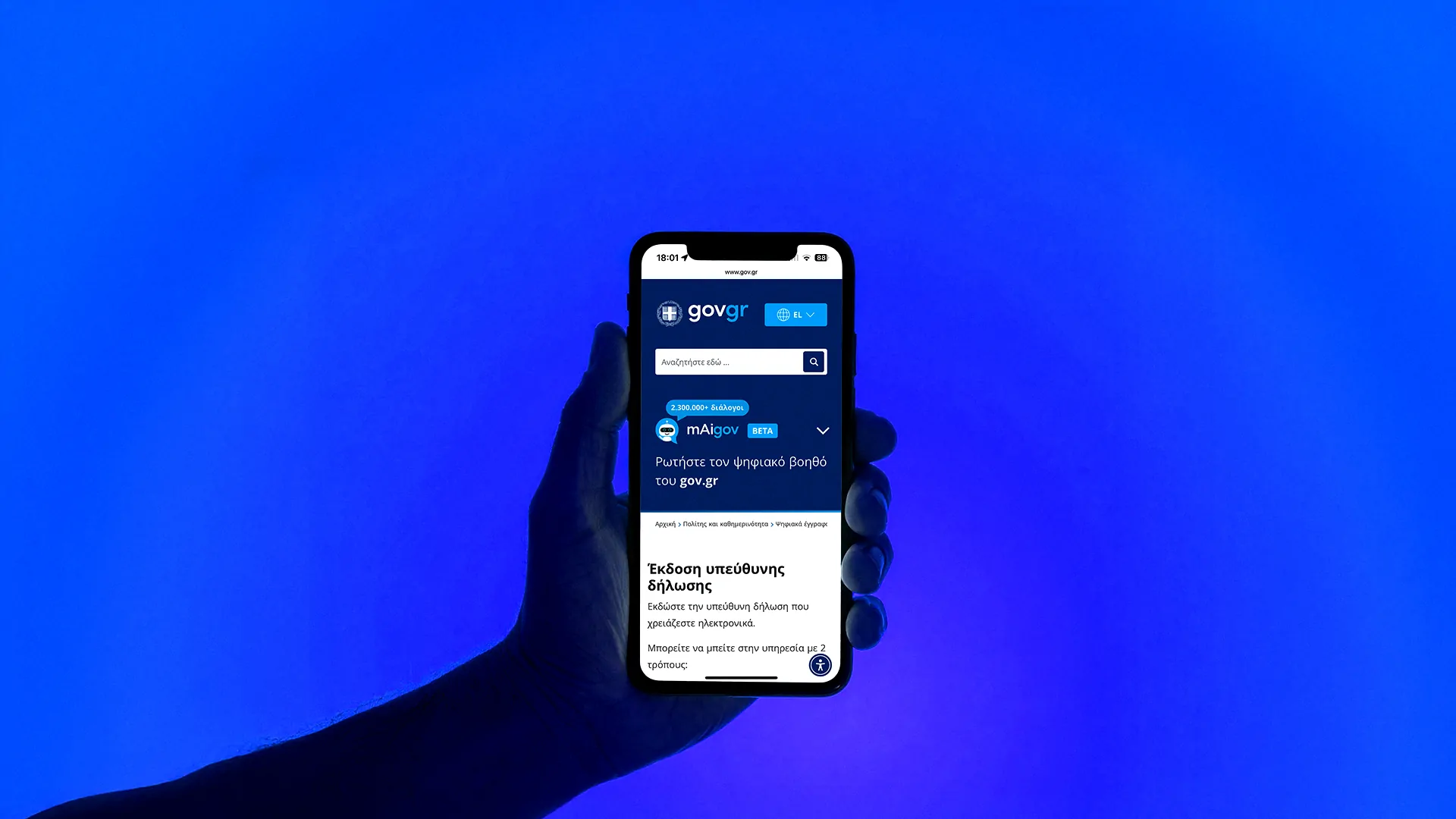
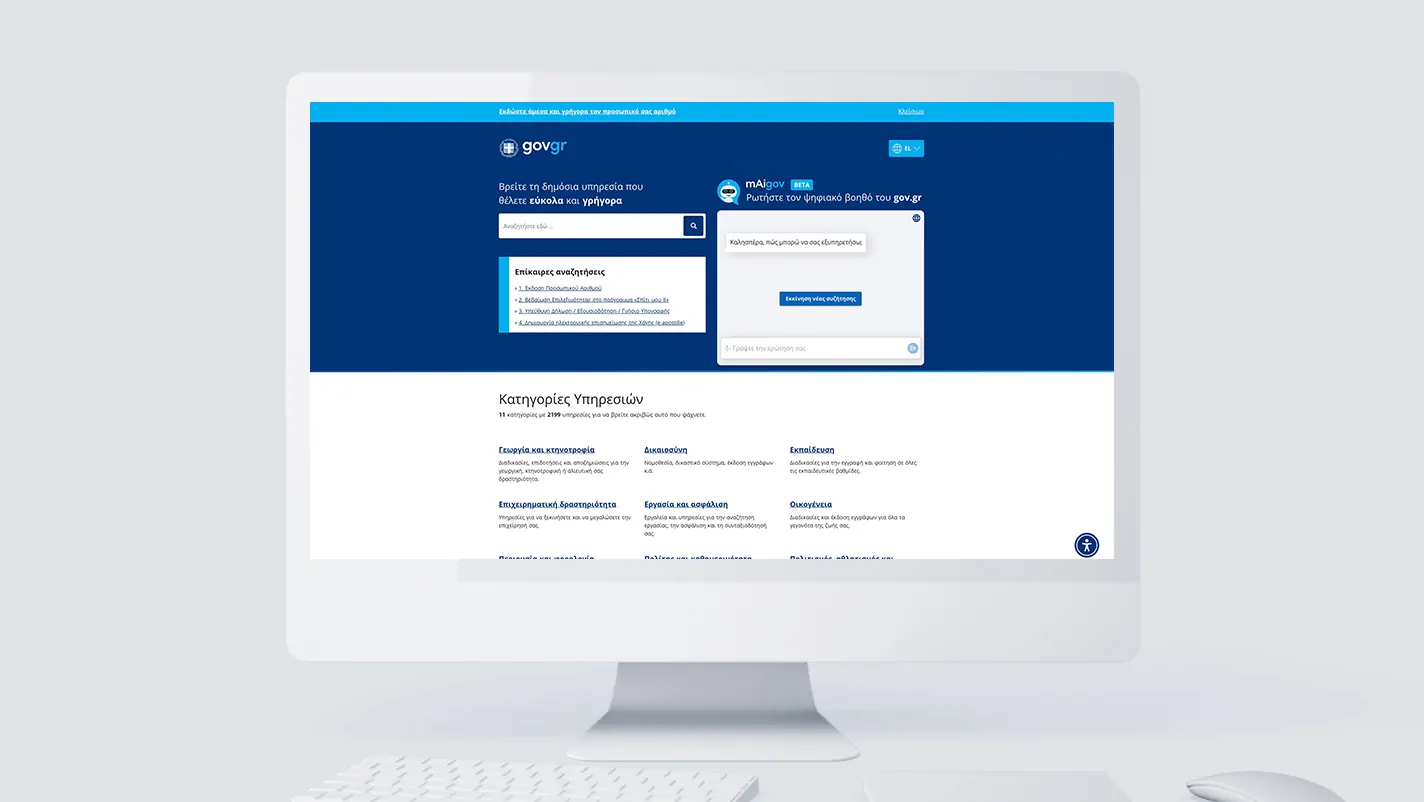
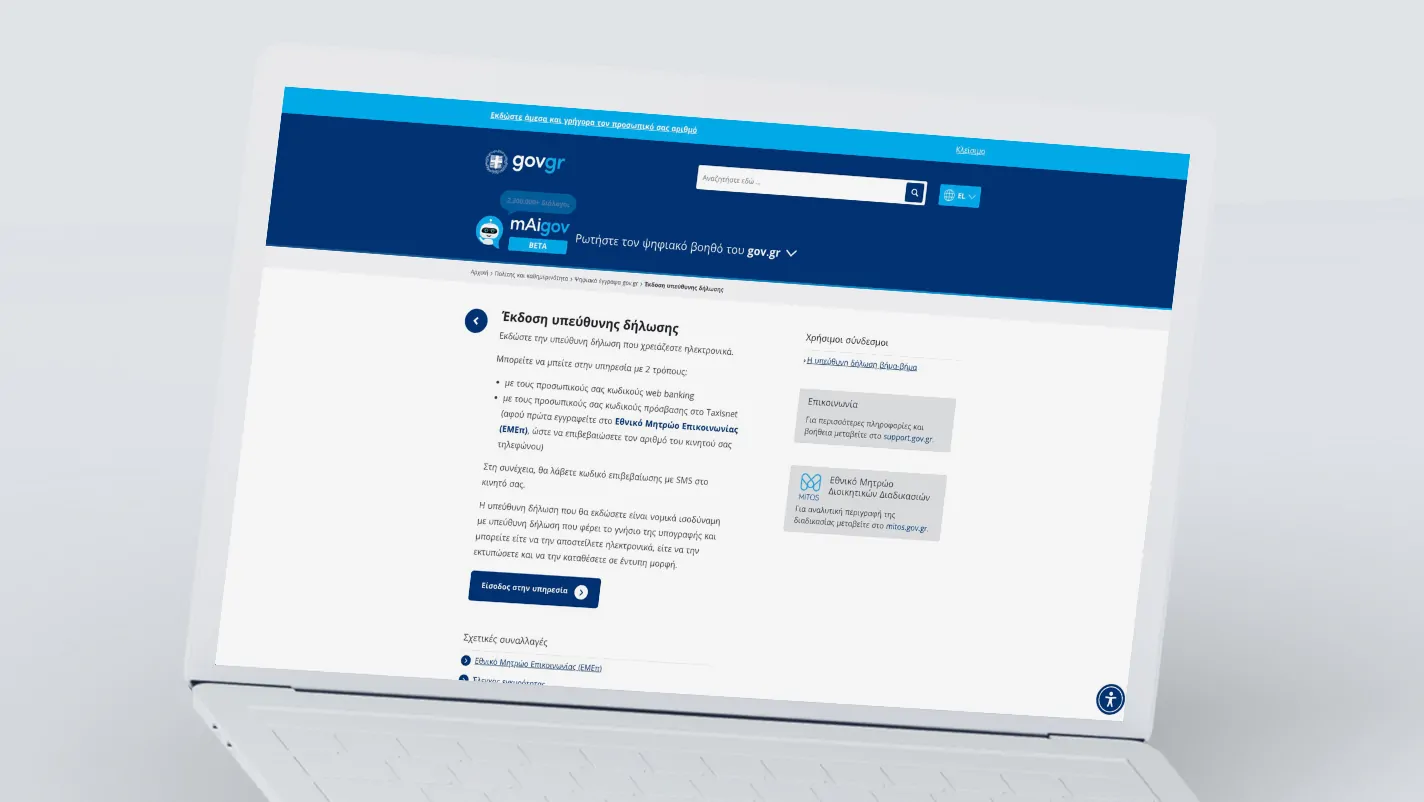
Gov.gr is the Greek government’s online platform that enables the completion and processing of time-consuming, bureaucratic procedures. It is used by millions of Greek citizens and thousands of businesses, who can quickly and easily find a wide range of digital services.
The Goal
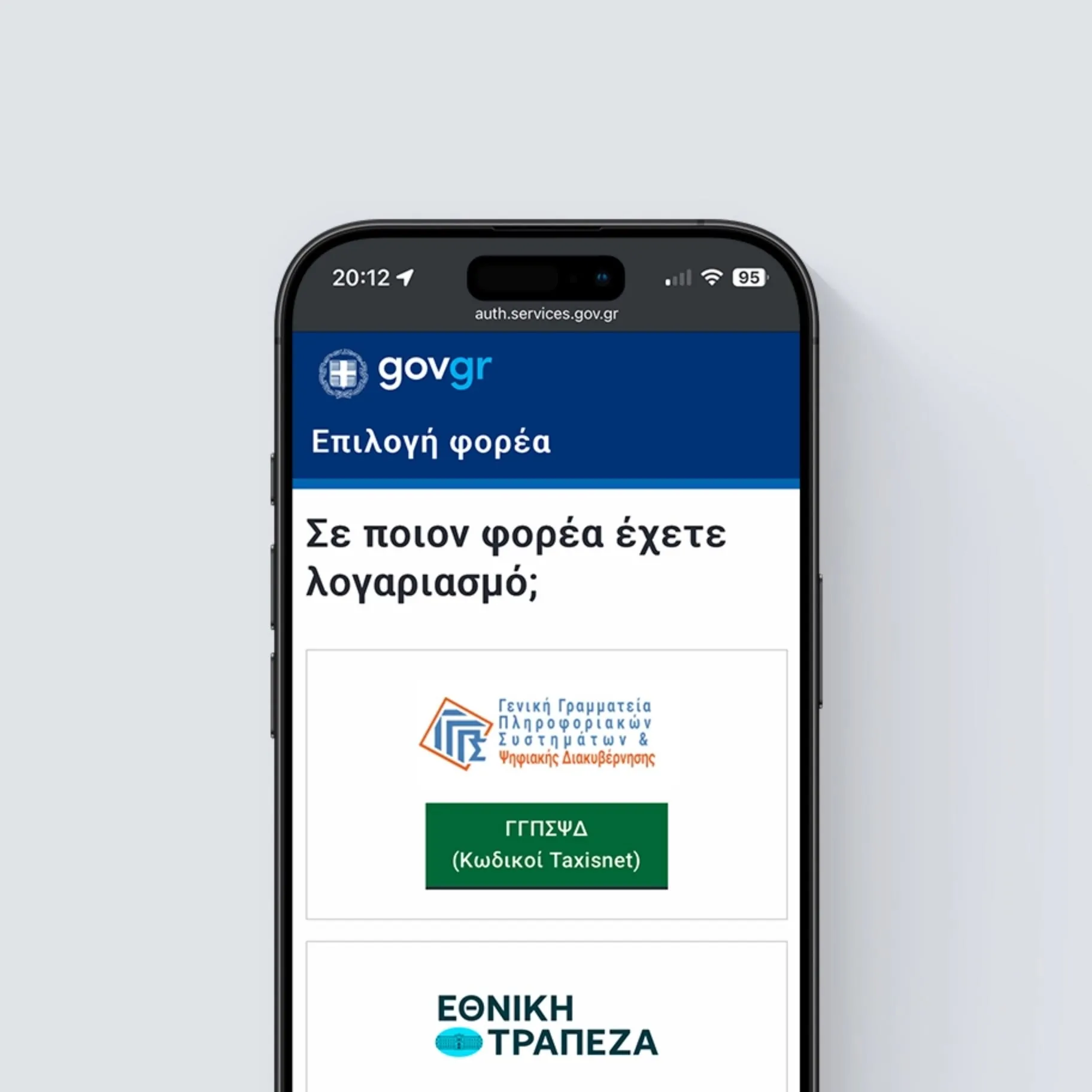
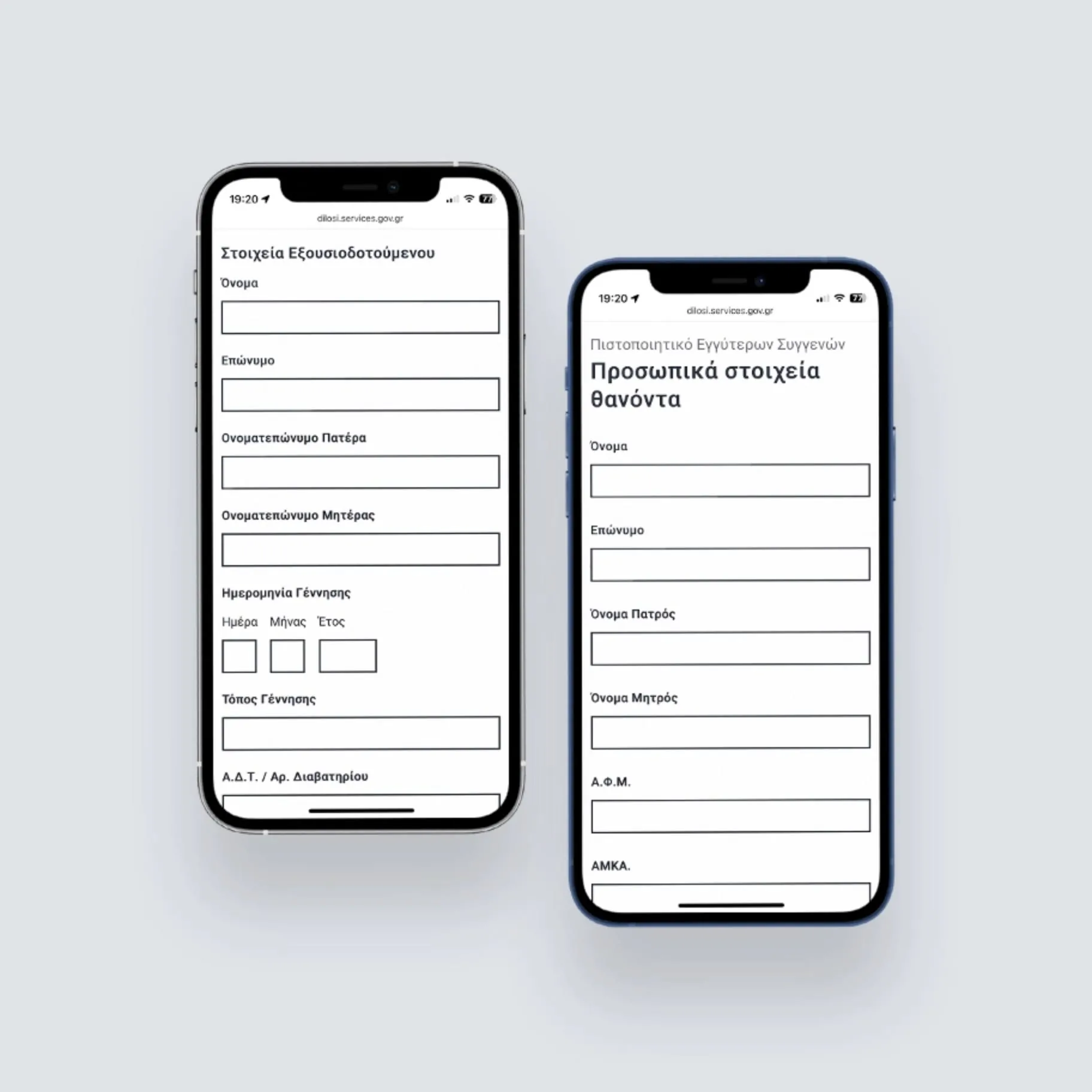
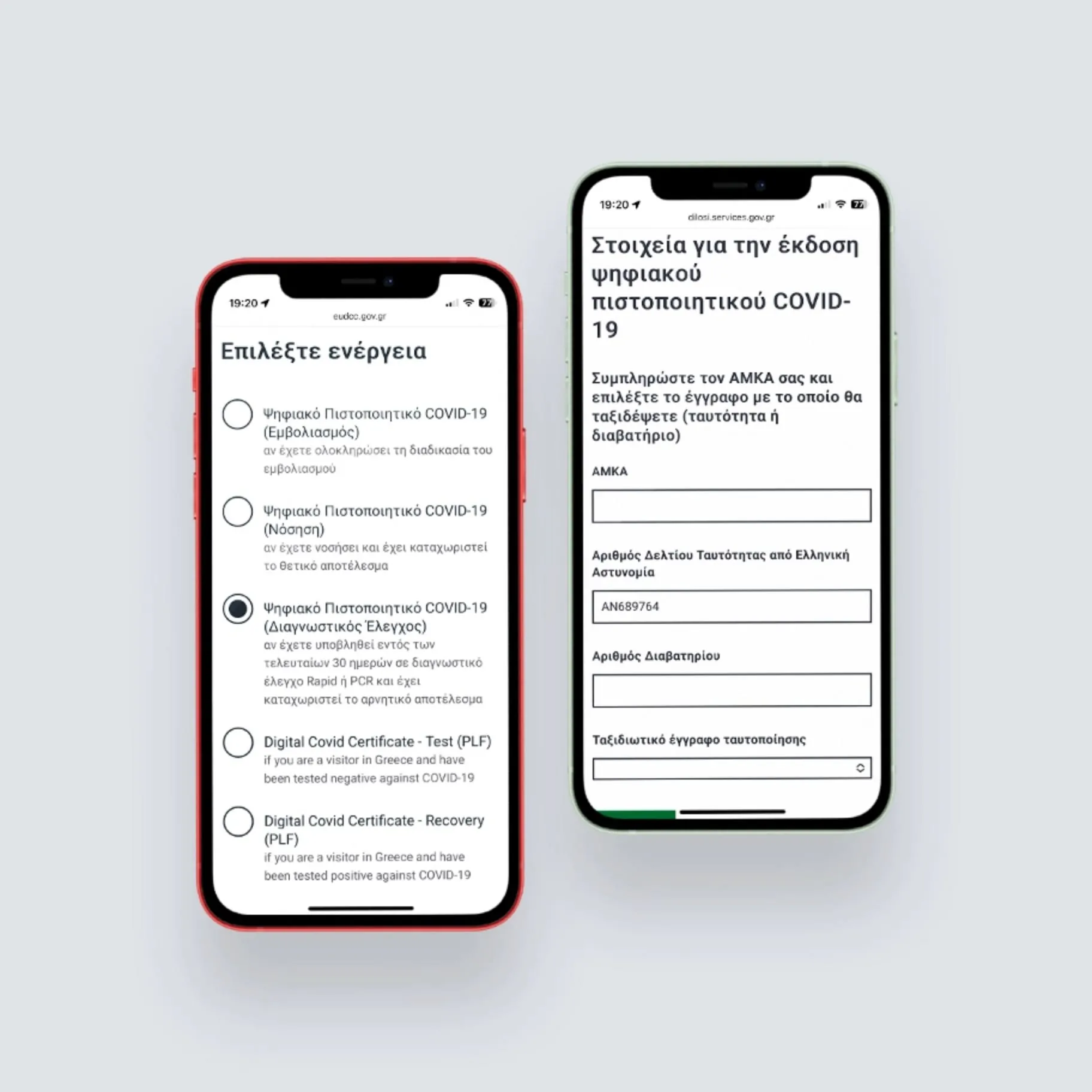
Enhancing the accessibility of the 12 most popular digital services on the Gov.gr platform (used by millions of citizens), so that as many citizens with disabilities as possible can use them. The services we reviewed included the issuance of authorization, responsible declarations, birth certificates, family status certificates, and marriage registration. That was boiled down to two main objectives:
- Identify and prioritize the accessibility issues across all 12 services
- Remediation of issues and certification of the 12 services’ compliance with international web accessibility standards, according to WCAG (Web Content Accessibility Guidelines) 2.1.
The Challenge
The challenges unfold in three parts:
- Coverage. Twelve service templates, each with its own structure and interactions. We needed a systematic way to find issues and fix the ones with the widest reach first.
- Rigour. Meeting WCAG 2.1 meant every fix had to be verified, not just applied. Overlay tools and “quick” fixes were not enough. The platform needed deep, issue-by-issue work and repeated expert re-auditing.
- Real-world validation. Passing a technical check does not prove a service works for someone using a screen reader. So we tested with real users and fed what we found back into the fixes.
The Solution
We applied our accessibility methodology: a structured approach that combines expert-based audits, guided remediation, and usability testing with users with disabilities.
Our methodology covers the full range of technical expertise needed to address digital accessibility issues and goes beyond limitations such as:
- Automated tools catch only a fraction of accessibility issues.
- Accessibility Overlays (or widgets) usually patch surface problems while leaving the complex ones unresolved.
- Even full technical compliance does not prove that a real person can use a digital service.
The work ran across eight stages:
- First accessibility audit, manual expert review, plus automated testing.
- First round of remediation/fixes.
- Second accessibility audit.
- Second round of fixes.
- Usability testing with 10 users with disabilities.
- Third round of fixes, based on the usability testing.
- Final audit on specific templates to verify that all the issues up to stage 6 are resolved.
- Accessibility Statement.
Every audit-fix-re-audit cycle meant no issue was signed off without an independent check. We performed usability testing at Stage 5, after most of the technical work was done, so that participants encountered a much-improved platform, and any remaining barriers reflected real usability gaps rather than unfinished fixes. During remediation, we worked closely with GRNET, the organization that builds the Gov.gr services.
Project Outcome & Impact
This was the first organized, accessibility expert-led effort to tackle digital accessibility on Gov.gr and, as far as we know, on any public-sector platform in Greece.
The current state is that most Greek public-sector properties use accessibility overlays. Projects like this one show that cycles of expert auditing, remediation, and usability testing with real users with disabilities may not be the fastest route, but they are the one that delivers valid results you can stand behind, results that account for the experience of real people.
We are proud of our work and humbled by the recognition.
-

Best Citizen Experience
Gold
-

Disabilities / Chronic Diseases
Silver